MoSCoW - Must Should Could Wont
A prioritization technique when planning work and strategy, helping reach a common understanding with stakeholders on the importance they place on the delivery of respective feature.
Priorities should be fixed for the specified time period (e.g. weekly plan), only changed by extreme exception to avoid wasted effort.
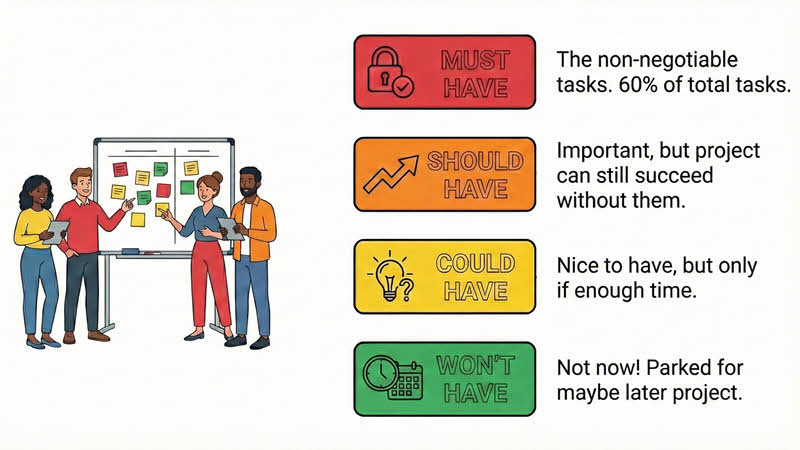
MoSCoW is an acronym to remember four prioritization categories:
- Must have: critical to delivery success
- Should have: Important but not currently time critical
- Could have: add some value if time allows
- Won't have yet: lowest payback so not included the current scope
All "Must Have" priorities need to be delivered in the specified time frame, otherwise significant cost or opportunity is lost and delivery is viewed as a failure.
MoSCoW works well with time-boxing, to enhance focus on making decisions.
Priorities can be downgraded with agreement by all relevant stakeholders, typically when an unexpected situation occurs
Dependant work priorities at the same level
If a feature is deemed a "Must Have" then all work essential to make that happen is also prioritised as "Must Have".
An inspiration for Minimum Viable Product
A Minimal Viable Product is a term often used by Starup companies to define the set of features that must be delivered to be considered a working product for customers.
Feature Planning
Review the current feature requests (tickets / backlog) and define the priority a feature has within the established time-frame of the planning session, e.g. the current week / sprint.
Run a MoSCoW session at the start or end of week
A planning meeting on Monday morning sets the focus and expectations for the week.
Use the MoSCoW within or at the end of the meeting to ensure the more important work will be done.
A planning meeting on Friday afternoon can support switching off work for the weekend.
Running a MoSCoW planning session after the weekly demos which also help stakeholders focus on priorities for next week.